Nairobi National Park Entrance Fees

(2025 Updated)

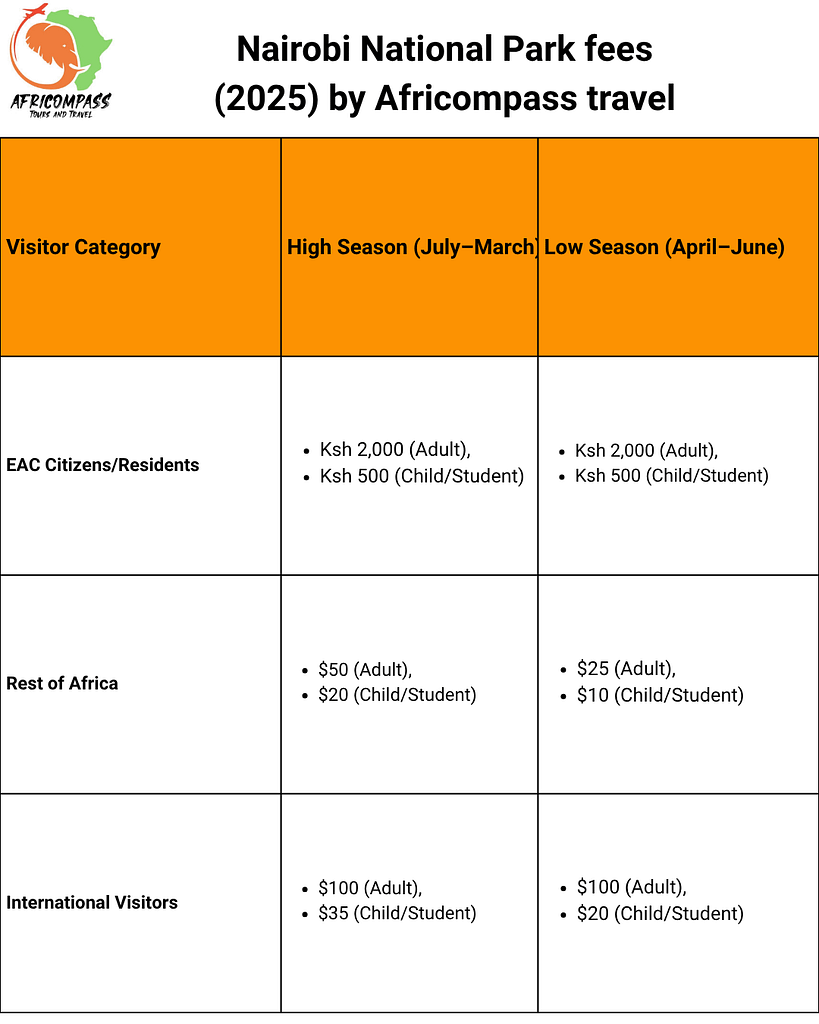
How much is the Nairobi National Park entry fee? Well, this ranges from $20 to $40 depending on age and residency. The park located just outside Kenya’s vibrant capital city, is a unique and cherished conservation area. Offering a close encounter with African wildlife, this park attracts both tourists and locals. As a crucial part of planning a visit, understanding the entrance fees is essential to ensure an enjoyable and informed experience.

Entrance Fee Structure

The entrance fees for Nairobi National Park vary based on visitor categories, including residents, citizens, and non-resident tourists. The fee structure is typically set by the Kenya Wildlife Service (KWS), the entity responsible for managing the park.

Nairobi national park entrance fees 2025


Nairobi National Park Entry Fee for Residents

Adult citizen residents: Standard entrance fees is approximately Ksh.400 while for children is around Ksh 200

Children residents: Typically, children below the age of 3 are admitted free of charge, while those between 3 and 18 years old enjoy reduced rates of apx. Ksh 200

Nairobi National Park Entry Fee for Students 

With valid student identification, students can access the park at discounted rates. As a student , you will pay Ksh. 215 ($20) regardless of residency.

Nairobi National Park Entry fee for Non-Residents

Visitors from outside Kenya, often referred to as non-residents and tourists, pay higher entry fees compared to residents and citizens. As a Non-Resident adult Tourist, you will pay $35 per day during the low season and $60  per day during high season.

As for non-resident children, they will pay $20 during the low season as well as the high season.

The fees contribute to the conservation and maintenance of the park.

Nairobi National Park Entry Fee Packages

Here are Nairobi National Park packages fees as offered by various tour and travel companies:

  1. Nairobi National Park Itinerary by Noni Golfing Safaris; The fee is $50. Which caters for transport in a Safari Van, Game drives in the park, English speaking driver guide and government taxes only. The fee excludes park entry fee and lunch.
  2. Nairobi National Park, Karen Blixen and Giraffe Center Itinerary by Noni Golfing Safaris; The fee is $70 and it caters for Transport in a Safari Van, Game drives, English speaking driver guide and government taxes. The package excludes lunch and park entry fees.
  3. Nairobi National Park Half Day Tour by Plentiful Adventures; The fee is $34.


Special Fees and Additional Charges

Apart from the standard entrance fees, Nairobi National Park may also have special fees or additional charges for specific activities or services. These could include:

  • Vehicle Entry Fees: Private vehicles, vans, or tour buses entering the park may incur additional fees based on the type of vehicle and purpose of the visit.

  • Guided Tours: Some visitors opt for guided tours conducted by park rangers or experienced guides. These tours could involve an extra fee, providing valuable insights and enhancing the overall wildlife experience.

  • Photography and Filming Fees: Commercial photographers or filmmakers often need to obtain special permits and pay additional fees to capture images or videos for professional or commercial use.

  • Park Facilities: Certain facilities within the park, such as picnic spots, campsites, or educational centers, might have separate charges for usage.

Summary of vehicle entrance fees at Nairobi National park
Vehicle TypeCapacityEntry Fee
Safari VehicleLess Than 6 SeatsKsh 300
 6 – 12 SeatsKsh 1,030
 13 – 24 SeatsKsh 2,585
 25 – 44 SeatsKsh 4,050
 45 Seats And AboveKsh 5,000
Trucks1 – 3 TonsKsh 515
 4 – 7 TonsKsh 2,155
 8 Tons And AboveKsh 3,015
Aircraft (Single Landing Fees)Up To 3 SeatsKsh 300
 3 – 6 SeatsKsh 500
 7 – 14 SeatsKsh 1,000
 15 – 20 SeatsKsh 2,155
 21 Seats And AboveKsh 3,015
Discounts and Promotions

Nairobi National Park and the Kenya Wildlife Service occasionally offer discounts, promotions, or packages, especially during specific times of the year, holidays, or as part of special events. These initiatives are aimed at encouraging more people to visit the park and promote wildlife conservation.

Booking and Payment Methods

Visitors can often pay the entrance fees in cash ,Mpesa or by card at the park entrance. However, to streamline the process and avoid delays, it is advisable to carry the correct amount in cash or use card payment options if available. For guided tours or special activities, advance booking may be required through a travel company like Africompass Travel, allowing for a smoother entry and enhanced experience.

Nairobi National Park entrance fees Summary

Understanding  Nairobi National Park entrance fees is very important before you visit.These fees play a vital role in supporting the conservation efforts, maintaining the park, and ensuring a sustainable and enjoyable wildlife experience for visitors. Whether you’re a resident, citizen, or non-resident tourist, exploring the captivating wildlife within the heart of Nairobi is an experience worth every penny invested in the conservation of this remarkable natural sanctuary.

Nairobi National Park Rules and Regulations: Your Guide to a Safe and Responsible Visit

Park Hours:

  • The park is open for visitors from sunrise (around 6:00 am) to sunset (around 6:00 pm).

Driving:

  • Always obey the speed limit. It’s 50 km/h in most areas and 25 km/h in Nyerere Park.
  • Animals have the right of way. Yield to them and avoid obstructing their movement.
  • Stay on designated roads and trails. Off-road driving is strictly prohibited.

Wildlife Observation:

  • Observe wildlife from a safe distance (at least 200 meters for most animals). Remain inside your vehicle unless in designated areas.
  • Never feed the animals. It disrupts their natural diet and creates dependence on humans.
  • Maintain a quiet and respectful atmosphere. Avoid loud noises, including music, animal calls, clapping, or honking.
  • Do not throw objects at animals or attempt to attract their attention.

Respect the Environment:

  • Dispose of your trash properly in designated bins. Littering harms wildlife and the park ecosystem.
  • Smoking is not allowed while on game drives. Dispose of cigarette butts responsibly.
  • Avoid open fires outside designated camping areas. Extinguish any campfires thoroughly before leaving.
  • Do not pick plants, remove rocks, or disturb the natural environment.

Additional Regulations:

  • Camping is only permitted in designated campsites.
  • Picnics are allowed only in designated areas.
  • Domestic pets are not allowed inside the park.
  • Drones are strictly prohibited.

Remember: Your visit should be a positive experience for both you and the wildlife. By following these rules and regulations, you can help maintain the park’s natural beauty and ensure the safety of all visitors and animals.

Start planning your safari

Tell us your dates and dream, and a local specialist will craft your trip.

Danson Njuguna Safari specialist Start planning

Frequently asked questions

When is the best time to go on safari?

It depends on what you want to see. For the Great Migration river crossings in the Maasai Mara, visit between July and October, when the herds cross the Mara River in search of fresh grazing. For calving season and dense predator activity, January to March is excellent, particularly around the southern Serengeti. Kenya's two dry seasons (June to October and January to February) generally offer the clearest skies and easiest game viewing across Amboseli, Tsavo, and Samburu, since animals gather around limited water sources. The 'green season' (November and April to May) brings lush scenery, migratory birdlife, and lower rates, though some rural roads can be muddy. Tell us your travel dates and priorities, and we will recommend the destinations that fit best.

Do I need a visa and vaccinations?

Most nationalities need a Kenya eTA (Electronic Travel Authorisation), applied for online before you fly; Tanzania and Zanzibar require their own separate visa, available online or on arrival depending on your nationality. Entry requirements change from time to time, so confirm the current rules for your passport a few weeks before departure. A Yellow Fever vaccination certificate is mandatory if you are arriving from, or have transited through, a Yellow Fever risk country, and we recommend it in general along with being up to date on routine vaccinations (MMR, tetanus, hepatitis A and B). Most safari areas are malaria zones, so antimalarial medication is strongly advised. Always check final requirements with your doctor or a travel health clinic, and ask us for the latest entry rules when you book.

Are your safaris private or group?

Every itinerary we build is private and tailor-made by default: your own vehicle, driver-guide, and schedule, with no strangers added to your trip. That means you can linger an extra morning at a favourite lodge, adjust the route on the go, or add a visit to the Emmanuel New Hope Rescue Centre we support. If you would rather share costs or travel as a solo guest, we can also arrange a scheduled group departure and match you with other travellers on similar dates. Either way, your safari is planned by our Nairobi-based specialists around your budget, dates, and interests, not a fixed package.

How much does a Kenya safari cost?

Safari costs vary widely depending on where you stay and how you travel. Budget camping safaris in parks like Amboseli or Lake Nakuru can start from around USD 150 to 250 per person per day, mid-range lodge safaris typically run USD 250 to 450 per day, and luxury tented camps in the Maasai Mara or Serengeti can exceed USD 750 per day. Your quote always includes a private vehicle, driver-guide, park fees, and accommodation as specified in your itinerary. Since every trip we build is tailor-made, tell us your budget and travel dates and we'll show you exactly what it buys, with no hidden extras.

What should I pack for an African safari?

Pack light, neutral-coloured clothing (khaki, olive, beige) for game drives, since bright colours and dark blue can attract tsetse flies in some regions. Bring layers for early morning drives, which can be cold even near the equator, plus a hat, sunglasses, and high-SPF sunscreen. A good pair of binoculars, a camera with a zoom lens, and a portable charger make a real difference to the experience. Comfortable closed shoes are more useful than sandals, and most lodges offer laundry service, so you rarely need more than a week's worth of clothing even on a longer trip. We send a full packing checklist tailored to your specific itinerary and season once you book.

Do you offer self-drive or chauffeur-driven car hire?

Yes. Alongside our guided safaris, we offer both self-drive car hire and chauffeur-driven vehicles for clients who want more flexibility around Nairobi, the coast, or shorter road trips. Self-drive suits experienced drivers comfortable with Kenyan road conditions, while a chauffeur-driven car is the better choice for game-viewing routes, night driving, or if you'd simply rather relax and let a local expert handle the roads. All our vehicles are well-maintained 4x4s suited to both tarmac and rougher safari tracks. Let us know your route and dates and we'll recommend the right option.

Is it safe to travel to Kenya and Tanzania?

Millions of visitors travel safely to Kenya and Tanzania every year, and the main tourist circuits, national parks, and coastal resorts are well-established and closely monitored. As with any international travel, sensible precautions apply: use a reputable operator (we're KATO-verified), avoid displaying valuables in cities, and follow your guide's advice in wildlife areas, where the real risk is animals, not crime. We stay in regular contact with our clients throughout their trip, and our drivers know the routes and current conditions well. If you have specific safety questions about your itinerary, we're happy to talk them through before you book.

Can you combine a safari with a beach holiday in Zanzibar or Diani?

Absolutely, it's one of our most popular combinations. A typical itinerary pairs 4 to 7 days on safari in the Maasai Mara, Amboseli, or Serengeti with 3 to 5 days unwinding on the beach in Zanzibar or Diani Beach, taking advantage of short connecting flights between the two. We handle all the logistics, including domestic flight bookings and airport transfers, so you go straight from game drives to the Indian Ocean without the stress of planning it yourself. Tell us how many days you have and we'll suggest a balance between wildlife and beach time that fits your trip.

Your Question