maasai mara vs serengeti scaled
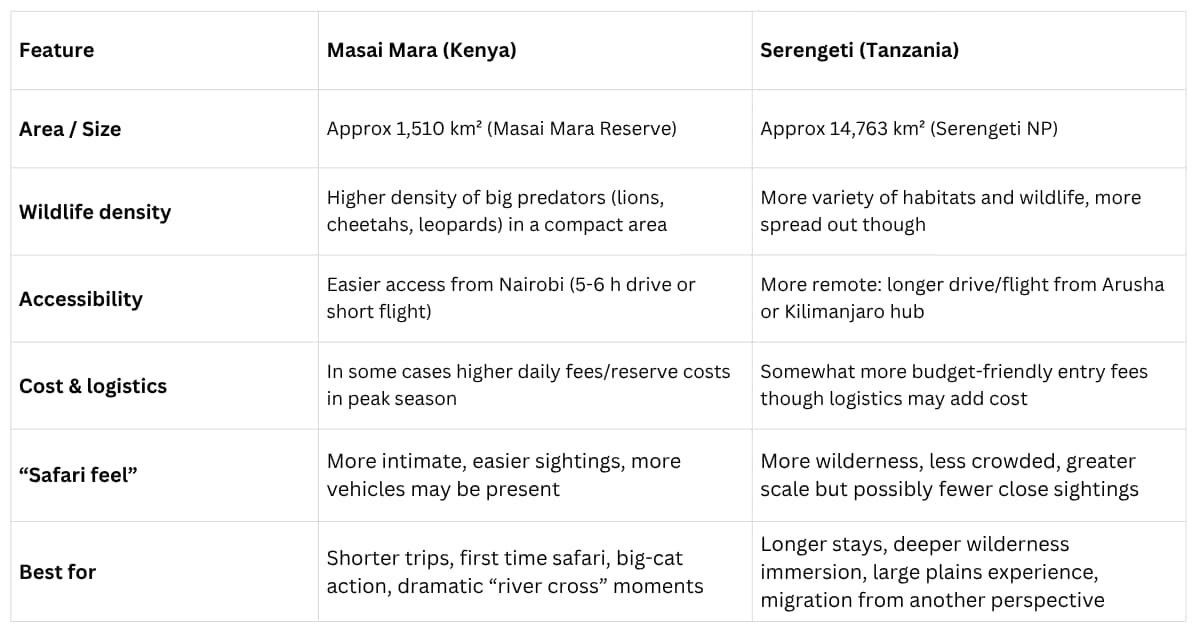
At a Glance: Key Differences
Untitled Facebook Ad 8
Landscape & Wildlife Experience
Landscape & Vibe

– Masai Mara: Scenic rolling hills, open savannahs, the Mara River, acacia trees and a classic “storybook” safari look. 
– Serengeti: Vast open plains, kopjes (rock outcrops), river systems, larger scale wildness. 
Because the Serengeti is much larger, you’ll feel more “out in the wild” — but also driving distances may be longer to spot animals.

Wildlife & Sightings


Wildlife is excellent in both places, but the style differs:

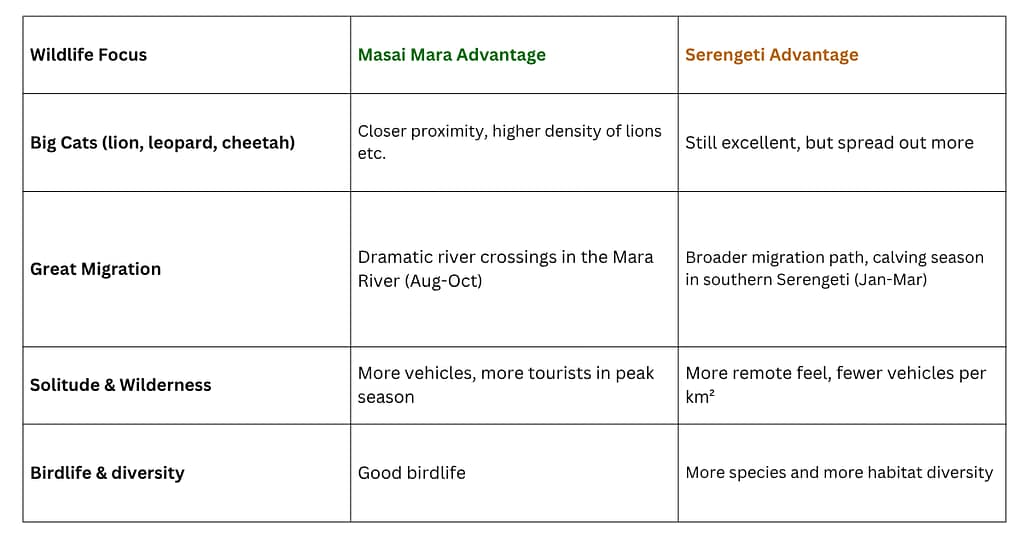
Masai Mara: Because of its compact size and high density of wildlife, you’re likely to see big predators sooner. 

Serengeti: Offers a wider variety of species, more habitat types, and greater possibility of “untouched” sightings. But sometimes you might drive longer before hitting a major sighting.

Wildlife Sightings Table
Untitled Facebook Ad 9
Best Time to Visit & Migration Highlights
When to go
  • Masai Mara: Peak wildlife views often July to October, especially for river crossings. 

  • Serengeti: You can design around different zones — e.g., calving season in Jan-Mar in southern plains; peak dry season June-Oct in central/ northern areas. 

Migration visuals

Really a highlight — the migration flows between the Serengeti and the Masai Mara ecosystem.
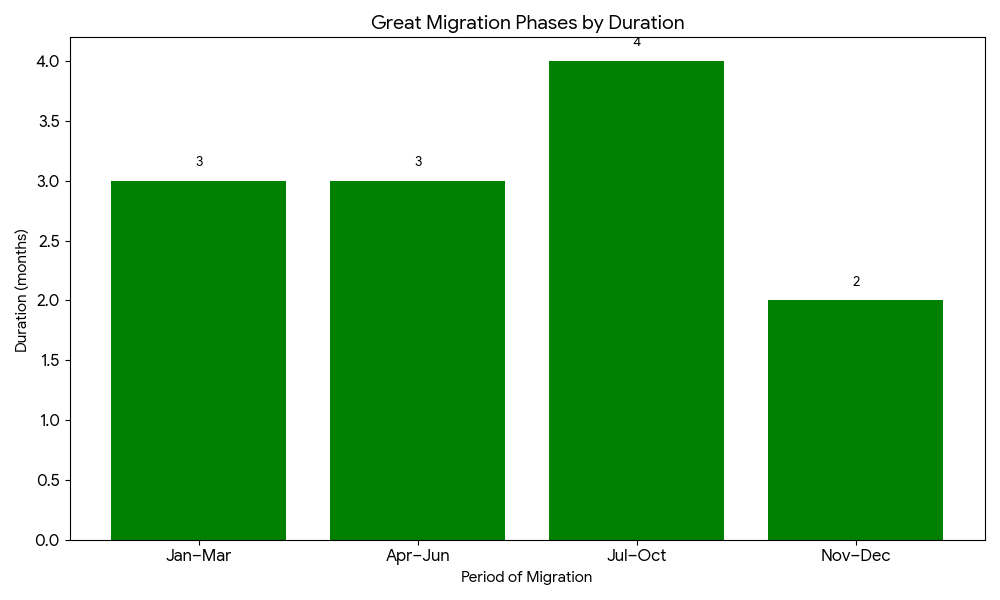
Here’s a simple chart:

bar chart
Logistics, Travel Time & Cost Considerations
Travel Accessibility
  • Masai Mara: From Nairobi, you can drive ~5-6 hours or take a ~45-min flight. Shorter transit means less time lost. 

  • Serengeti: From Arusha/Kilimanjaro you may face 6-7+ hours by road or a domestic flight; more travel may be required. 

Cost Comparison

While costs vary widely depending on luxury level, season and transport, some general points:

  • Masai Mara has seen increases in entry fees/park-fees. 

  • Serengeti may offer more value in terms of budget mid-range options.

Which Should You Choose? Decision Guide

Here’s a simplified decision tree:

  • If you have limited time (e.g., 3-4 days) → prefer ease of access, want high chance of big-cat sightings → Masai Mara.

  • If you have more time (5-7+ days), want wildness, solitude, open plains, don’t mind longer travel → Serengeti.

  • If you’re seeking the Great Migration river crossing spectacle (Aug-Oct) → Masai Mara is ideal.

  • If you want to explore migration calving season, different habitats, longer expedition feel → Serengeti.

  • Budget/luxury: Both have options; but factor in transit, lodge scale and park fees when comparing.

Ultimately neither is objectively “better” ,  it’s which one aligns best with your goals.


Summary

The Masai Mara offers a compact, dramatic, “classic safari” experience with easier access and high-density wildlife. The Serengeti delivers broad scale, varied habitats, a sense of wilderness and potentially more remote experiences if you have the time. Use the tables and comparison above to match your travel style, time-frame and budget.


Conclusion 

Whichever destination you pick, you’re in for an unforgettable adventure. If you’d like expert help designing your itinerary, choosing the ideal season, picking the right lodge, or arranging travel logistics, let Africompass Travel be your guide. Visit africompasstravel.com today to book your safari in the Masai Mara or Serengeti ,  and let us tailor a journey that fulfils your wildlife dream.
 
Africompass 15 OFF banner 1

Start planning your safari

Tell us your dates and dream, and a local specialist will craft your trip.

Danson Njuguna Safari specialist Start planning

Frequently asked questions

When is the best time to go on safari?

It depends on what you want to see. For the Great Migration river crossings in the Maasai Mara, visit between July and October, when the herds cross the Mara River in search of fresh grazing. For calving season and dense predator activity, January to March is excellent, particularly around the southern Serengeti. Kenya's two dry seasons (June to October and January to February) generally offer the clearest skies and easiest game viewing across Amboseli, Tsavo, and Samburu, since animals gather around limited water sources. The 'green season' (November and April to May) brings lush scenery, migratory birdlife, and lower rates, though some rural roads can be muddy. Tell us your travel dates and priorities, and we will recommend the destinations that fit best.

Do I need a visa and vaccinations?

Most nationalities need a Kenya eTA (Electronic Travel Authorisation), applied for online before you fly; Tanzania and Zanzibar require their own separate visa, available online or on arrival depending on your nationality. Entry requirements change from time to time, so confirm the current rules for your passport a few weeks before departure. A Yellow Fever vaccination certificate is mandatory if you are arriving from, or have transited through, a Yellow Fever risk country, and we recommend it in general along with being up to date on routine vaccinations (MMR, tetanus, hepatitis A and B). Most safari areas are malaria zones, so antimalarial medication is strongly advised. Always check final requirements with your doctor or a travel health clinic, and ask us for the latest entry rules when you book.

Are your safaris private or group?

Every itinerary we build is private and tailor-made by default: your own vehicle, driver-guide, and schedule, with no strangers added to your trip. That means you can linger an extra morning at a favourite lodge, adjust the route on the go, or add a visit to the Emmanuel New Hope Rescue Centre we support. If you would rather share costs or travel as a solo guest, we can also arrange a scheduled group departure and match you with other travellers on similar dates. Either way, your safari is planned by our Nairobi-based specialists around your budget, dates, and interests, not a fixed package.

How much does a Kenya safari cost?

Safari costs vary widely depending on where you stay and how you travel. Budget camping safaris in parks like Amboseli or Lake Nakuru can start from around USD 150 to 250 per person per day, mid-range lodge safaris typically run USD 250 to 450 per day, and luxury tented camps in the Maasai Mara or Serengeti can exceed USD 750 per day. Your quote always includes a private vehicle, driver-guide, park fees, and accommodation as specified in your itinerary. Since every trip we build is tailor-made, tell us your budget and travel dates and we'll show you exactly what it buys, with no hidden extras.

What should I pack for an African safari?

Pack light, neutral-coloured clothing (khaki, olive, beige) for game drives, since bright colours and dark blue can attract tsetse flies in some regions. Bring layers for early morning drives, which can be cold even near the equator, plus a hat, sunglasses, and high-SPF sunscreen. A good pair of binoculars, a camera with a zoom lens, and a portable charger make a real difference to the experience. Comfortable closed shoes are more useful than sandals, and most lodges offer laundry service, so you rarely need more than a week's worth of clothing even on a longer trip. We send a full packing checklist tailored to your specific itinerary and season once you book.

Do you offer self-drive or chauffeur-driven car hire?

Yes. Alongside our guided safaris, we offer both self-drive car hire and chauffeur-driven vehicles for clients who want more flexibility around Nairobi, the coast, or shorter road trips. Self-drive suits experienced drivers comfortable with Kenyan road conditions, while a chauffeur-driven car is the better choice for game-viewing routes, night driving, or if you'd simply rather relax and let a local expert handle the roads. All our vehicles are well-maintained 4x4s suited to both tarmac and rougher safari tracks. Let us know your route and dates and we'll recommend the right option.

Is it safe to travel to Kenya and Tanzania?

Millions of visitors travel safely to Kenya and Tanzania every year, and the main tourist circuits, national parks, and coastal resorts are well-established and closely monitored. As with any international travel, sensible precautions apply: use a reputable operator (we're KATO-verified), avoid displaying valuables in cities, and follow your guide's advice in wildlife areas, where the real risk is animals, not crime. We stay in regular contact with our clients throughout their trip, and our drivers know the routes and current conditions well. If you have specific safety questions about your itinerary, we're happy to talk them through before you book.

Can you combine a safari with a beach holiday in Zanzibar or Diani?

Absolutely, it's one of our most popular combinations. A typical itinerary pairs 4 to 7 days on safari in the Maasai Mara, Amboseli, or Serengeti with 3 to 5 days unwinding on the beach in Zanzibar or Diani Beach, taking advantage of short connecting flights between the two. We handle all the logistics, including domestic flight bookings and airport transfers, so you go straight from game drives to the Indian Ocean without the stress of planning it yourself. Tell us how many days you have and we'll suggest a balance between wildlife and beach time that fits your trip.

✕

Your Question

Book / Enquire WhatsApp